


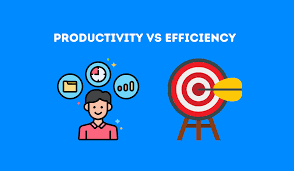
The first time I heard a CEO admit, almost offhand, that efficiency had become as strategic as revenue growth was at a panel in Manchester two springs ago. These were executives from mid-sized UK manufacturers, firms that for decades had measured success by expansion or quarterly sales numbers alone. Now, they talked about energy usage, waste streams, and supply chain optimisation with the urgency usually reserved for market share disputes. What struck me most wasn’t how technical their language had become — it was how much pride they took in squeezing inefficiencies out of operations, almost like sculptors removing excess stone rather than layering on new business lines.
Across boardrooms from Leeds to London, there’s a palpable shift: efficiency — once a backroom concern — is climbing the strategic agenda at the expense of older, simpler narratives about growth. This has been especially visible in sectors where energy costs and carbon regulation bite hardest. In the UK midmarket manufacturing space, for example, research shows that 72 per cent of firms reported increased profitability as a direct result of adopting more sustainable and efficient operations. Even more said sustainability was now a priority for the business.
What’s fascinating is how this material shift isn’t just a response to policy or consumer pressure but a recalibration of risk and reward. Firms that once saw sustainability obligations as cost centres now talk about them as profit engines. Efficiency in energy, materials, logistics is no longer about complying with environmental mandates. It’s about safeguarding margins in an era of volatile input prices and razor-thin profit buffers.
I remember sitting with a logistics director from a Midlands firm who casually pointed out that routing software had shaved hundreds of thousands of pounds off fuel costs in a single quarter, mostly by eliminating empty-return journeys and unnecessary idling. “People think this stuff is soft,” he said. “But this directly hits the bottom line.” Such examples underscore how efficiency plays a tangible role in strengthening profitability in ways that feel very real to accountants and very mundane to outsiders but are no less transformative for it.
This shift comes at a time when traditional levers of growth cheap capital, easy global supply chains are no longer guaranteed. Energy prices have oscillated sharply since the pandemic, and UK firms frequently cite them as a top concern. Efficiency becomes a defensive bulwark against these external shocks, as well as an offensive strategy to deepen competitive advantage. Tangible energy-saving measures from LED upgrades to smarter HVAC systems to digitised logistics can cut energy bills by 20‑25 per cent, especially for smaller enterprises.
The pressure isn’t just economic. The market itself is increasingly calibrated to value sustainability credentials. A majority of UK SMEs in a recent survey expressed confidence that they could remain financially stable while pursuing environmental goals. Investors, too, are tightening the lens on environmental, social and governance (ESG) factors, making efficiency and sustainability part of the valuation conversation — not an optional add-on. Firms that integrate these metrics into boardroom discussions increasingly find access to capital easier and cheaper, with green bonds and sustainability-linked loans growing in popularity.
All of this has an uneven geography and texture. In manufacturing hubs outside London, the emphasis is on physical efficiencies — energy systems, resource use, waste reduction. In service sectors, the focus often lands more on digital efficiency: data management, remote work, and process automation to trim redundancies. Both pathways reflect a broader cultural shift: sharpened awareness that every unit of waste, every unused hour of labour, and every inefficient process is a lost opportunity in a tighter market.
Strategically, there’s also a sense of existential realism: growth at any cost is an artifact of an earlier economic era. Today’s leaders speak more often of ‘sustainable growth’ — not only in the environmental sense but as a balanced pursuit of profitability, resilience, and long-term viability. The old binary between growth and profit is dissolving; efficiency is proving to be a bridge between them. Forget chasing top-line expansion without regard for cost: a strategy overly fixated on growth can leave a business exposed, especially in saturated or disrupted markets.
Another layer to this story is regulatory texture. UK schemes like the Energy Savings Opportunity Scheme (ESOS) or carbon reporting requirements don’t just mandate compliance; they illuminate opportunities for cost savings that might otherwise go unnoticed. Companies that use these requirements as strategic tools rather than bureaucratic hurdles often find themselves with clearer material usage profiles and sharper operational insights. That’s a subtle but powerful inversion: what once was a box‑ticking exercise becomes an engine for internal discovery and improvement.
Of course, the transition isn’t without its tensions. Not all CEOs are equally convinced; some still prioritise AI investment or digital transformation as the most immediate drivers of productivity, with sustainability goals lingering in longer-term planning cycles. And in firms where quarterly earnings remain the dominant metric of success, efficiency projects can struggle for attention against initiatives with more immediate headline appeal.
Yet the cumulative weight of evidence — from profitability uplifts to energy cost savings — suggests that efficiency isn’t a passing trend but a structural reorientation of business strategy. Firms that embed this mindset early are more resilient in downturns and more adept at capturing latent market opportunities, whether via customer loyalty, regulatory incentives, or capital flows attuned to sustainability performance.
For journalists watching these shifts unfold across boardrooms and factory floors alike, the story is less about a singular revolution and more about a quiet, relentless practical smartening up: the understanding that efficiency, properly understood, is about more than being lean. It’s about thriving amid uncertainty — and doing so with an eye on the planet as well as the profit and loss.
